
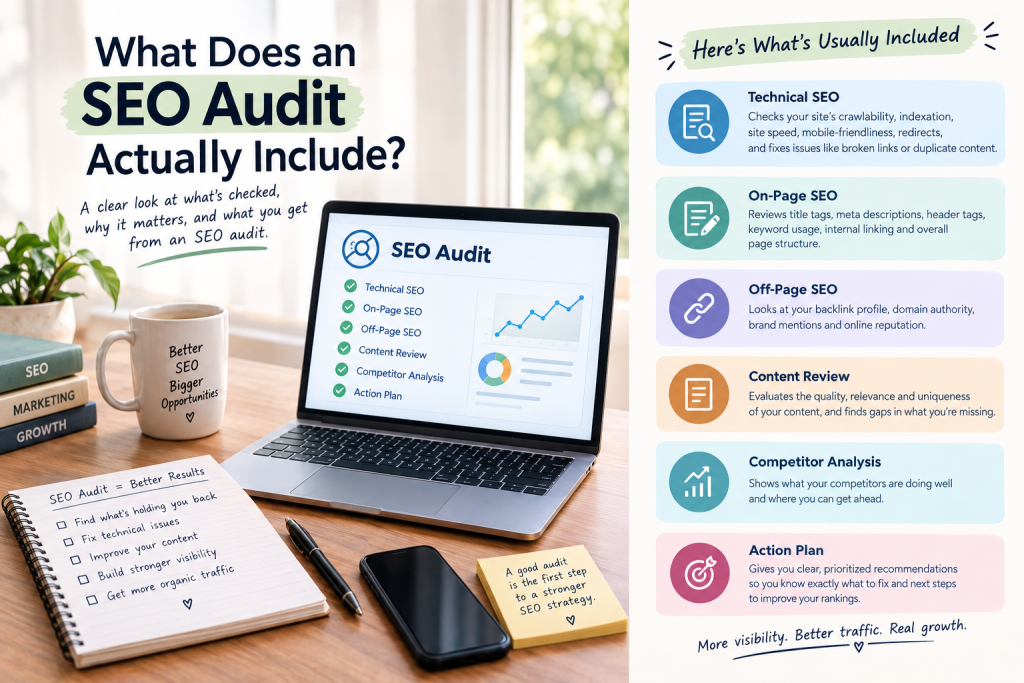
An SEO audit is a thorough review of your website’s current search performance, covering technical health, content quality, keyword targeting, and how easily search engines and AI tools can understand your site. If you have never had it done before, it can be hard to know exactly what you are paying for. Some businesses expect a single page of generic tips but it is far more specific than that, and it should be.
Why an SEO Audit Matters Before You Build a Strategy
Building a content plan or a keyword strategy without first understanding your site’s actual condition is a bit like renovating a house without checking the foundation first. You might make the surface look better, but underlying issues will keep limiting your results. This is exactly why an SEO audit should come before, not after, any serious strategy work begins.
A proper one gives you a clear, honest starting point. It tells you whether your site’s problems are mostly technical, mostly content related, or a mix of both, which changes everything about where time and budget should go next.
According to Google’s own Search Central documentation, a healthy site structure and genuinely helpful content are foundational to search visibility, which is precisely what a thorough audit is designed to evaluate.
What the Technical Portion of an SEO Audit Covers
The technical side of an SEO audit looks at how well search engines can actually crawl, index, and understand your website. This part typically includes checking page load speed, since slow pages frustrate visitors and are penalized in rankings. Tools like Google PageSpeed Insights are commonly used during this stage to get an objective read on load times.
A thorough technical SEO audit also includes checking mobile usability, since most searches now happen on phones, reviewing whether important pages are properly indexed, and confirming that no pages are accidentally blocked from appearing in search results at all.
It increasingly includes checking how well structured your content is for AI tools like ChatGPT and Perplexity, which rely on clear headings, direct answers, and well organized information to understand and potentially cite a page. This is quickly becoming a standard part of any modern audit, not an optional extra.
What the Content Portion Covers
The content side of an SEO audit looks at what is actually published on your site and whether it is doing its job. A good content focused report identifies pages that are too thin to rank well, pages that overlap so closely with each other that they compete for the same search instead of supporting one another, and genuine gaps where a topic your audience cares about simply has not been covered yet.
This part also looks at whether your existing content answers real questions clearly, or whether it reads as vague marketing language that neither helps a human reader nor gives a search engine anything specific to work with.
What the Keyword Portion of an SEO Audit Covers
This section checks whether your site is currently targeting the right keywords at all. It is common for a business to have decent content that targets the wrong phrases entirely, either because the keywords were guessed rather than researched, or because they were chosen for how professional they sound rather than how people actually search.
A proper keyword review during an SEO audit also flags easy opportunities, meaning keywords with real search volume and lower competition that your site could realistically rank for without an enormous amount of additional work.
What the Off Page Portion of an SEO Audit Covers
This part looks outside your own website, checking your backlink profile, meaning how many other credible websites link back to you, and whether your business appears consistently across local directories, Google Business Profile, and other trusted platforms. For local businesses in particular, this consistency matters a great deal for both traditional rankings and how confidently AI tools reference a business when answering local questions.
What You Should Receive From a Real SEO Audit
A genuine SEO audit should leave you with more than a list of problems. It should include a clear explanation of what was found, in plain language, not just technical jargon. It should be prioritized, so you know what to fix first versus what can wait. And it should connect directly to next steps, whether that means specific technical fixes, a content plan, or both.
If a report reads like a generic checklist that could apply to literally any website, that is a sign it was not built around your specific site at all.
Curious what your own site’s SEO audit would actually reveal? Book a free SEO audit and get a clear, honest picture rather than guesswork.
How an SEO Audit Connects to Strategy and Content
An SEO audit is not the end of the process, it is the starting point. Once you know your site’s real strengths and weaknesses, that information should directly shape your ongoing SEO strategy, including what to write about, what technical issues to fix first, and how to prioritize limited time and budget.
This is also where the distinction between different SEO roles becomes useful. If you are unsure whether you need broader strategic support or more focused content planning after your SEO audit, our post on SEO strategist versus SEO content strategist explains exactly how those two roles differ and where they overlap.
Frequently Asked Questions
How long does an SEO audit typically take?
It depends on the size of the website, but most audits for a small business site take anywhere from a few days to about two weeks to complete thoroughly.
How much should an SEO audit cost?
Costs vary widely depending on site size and provider, but a thorough SEO audit from an independent consultant is often more affordable than one from a large agency, without sacrificing depth.
Do I need an SEO audit if my website is brand new?
Yes, though the focus shifts slightly. A newer site benefits from an audit that confirms the technical foundation is solid from the start and that initial content and keyword targeting are on the right track before too much time and money goes into the wrong direction.
Can I do a basic SEO audit myself?
You can catch some surface level issues yourself using free tools, but a thorough SEO audit generally requires experience to correctly interpret technical data and prioritize what genuinely matters versus what is a minor issue.
How often should a business get an SEO audit done?
Once a year is a reasonable baseline for most small businesses, with more frequent check ins if you are actively working through a growth focused SEO strategy.
Final Thoughts
An SEO audit is not a vague formality, it is a genuine diagnostic tool that tells you exactly where your website stands and what to prioritize next. A good audit is specific to your actual site, prioritized clearly, and directly useful, not a generic template dressed up as a personalized report.
If you want an honest look at where your website currently stands, reach out here to book a free SEO audit and get real answers instead of guesswork.